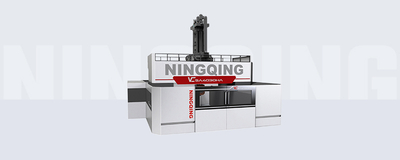
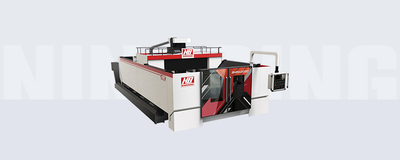
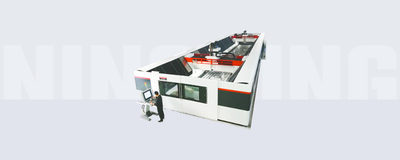
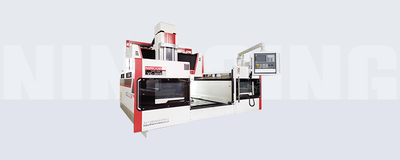
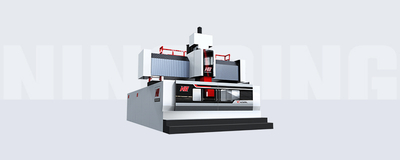
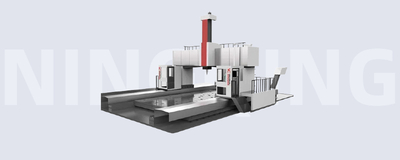
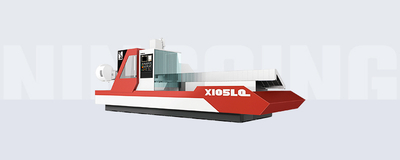
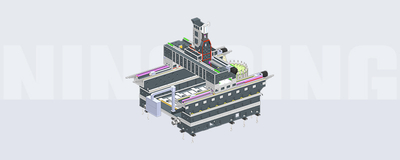
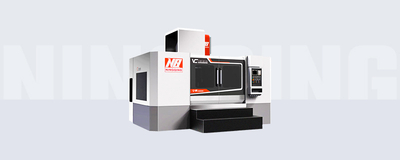
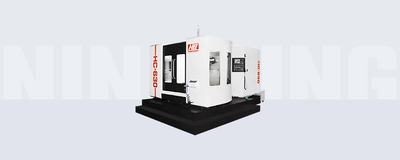
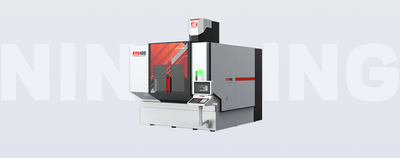
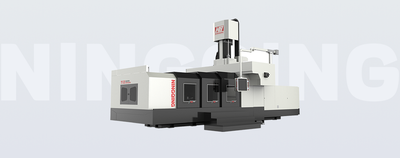
The drive axle housing of new energy vehicles (NEV) is a key component connecting the motor, reducer and wheels. Its precision and strength directly affect the performance and safety of the vehicle. CNC (computer numerical control) machining technology has become the core means of manufacturing drive axle housings with high precision and efficiency. This article will analyze the application technology of CNC machining in this field and analyze its process characteristics and advantages.
Machining requirements of drive axle housing
The drive axle housing is usually made of aluminum alloy or high-strength steel, and needs to be lightweight, high rigidity and complex geometry. For example, the bearing seat hole, gear mounting surface and cooling channel need to be machined inside, and there are complex connecting flanges on the outside. Machining requirements include dimensional tolerance within ±0.01 mm, surface roughness Ra below 0.8 microns, and high consistency to ensure assembly accuracy. These requirements put forward high standards for CNC technology.
CNC machining process
Rough machining: Use CNC milling machine or lathe to remove excess material from the blank. For example, aluminum alloy housings can be quickly milled with vertical machining centers (such as the Haas VF series) to ensure uniform subsequent finishing allowances.
Finishing: Use a five-axis CNC machining center (such as DMG MORI's DMU series) to process complex surfaces and hole systems. Five-axis linkage can complete multi-angle cutting at one time, such as deep cavities and inclined holes inside the housing.
Drilling and boring: CNC machine tools use high-precision boring tools to process bearing seat holes to ensure roundness and coaxiality. For example, the hole system processing error of a certain BYD drive axle housing is controlled at ±0.005 mm.
Surface treatment: High-speed cutting (HSM) combined with polishing technology improves surface finish and reduces friction resistance.
Inspection: After processing, a three-coordinate measuring machine (CMM) is used to verify the dimensions, and the CNC system can fine-tune parameters based on feedback.
Technical features and advantages
High-precision control: CNC machine tools use servo systems and laser calibration to reduce errors to micron level. For example, when machining the flange surface of the housing, the five-axis machine tool can ensure that the flatness is within 0.02 mm, which meets the tight fit between the motor and the reducer.
Adaptability to complex structures: The asymmetric design and porous structure of the drive axle housing require multi-angle machining. The five-axis CNC can easily cope with it through tool posture adjustment, reducing the error caused by multiple clamping.
Efficient production: The automatic tool change system (ATC) and optimized tool path shorten the processing cycle. For example, Mazak's five-axis machine can complete all feature machining of the housing in one clamping, increasing efficiency by 40%.
Material optimization: In aluminum alloy machining, the CNC's high-speed spindle (>15,000 RPM) is combined with minimal lubrication (MQL) to reduce thermal deformation and tool wear and improve material utilization.
As new energy vehicles increase their demand for lightweight and integration, CNC machining will further integrate intelligent technology. For example, adaptive control systems can adjust cutting parameters in real time to cope with material differences. In addition, the combination of CNC and additive manufacturing, 3D printing blanks and then finishing, will further optimize costs and efficiency.
Conclusion
In the manufacturing of new energy vehicle drive axle housings, CNC numerical control machining technology has high precision, complex adaptability and high efficiency as its core advantages, meeting the dual needs of lightweight and performance. From rough machining to finishing, its flexibility and reliability provide strong support for the industry. In the future, with the development of intelligent and hybrid manufacturing, CNC technology will play a greater role in the field of new energy vehicles.
We'd love to hear from you! Whether you have questions, need more information, or want to discuss a potential partnership, please fill out the form below and we'll get back to you as soon as possible.