Mold processing is an important part of modern manufacturing industry and is widely used in automobile, aerospace, electronics, medical and other industries. As the requirements for complex shapes and high precision of products continue to increase, high-speed machining (HSM) technology has been widely used in mold manufacturing. However, in the process of high-speed machining, due to the high cutting speed and drastic changes in tool force, how to control the machining error becomes the key. This article will explore the precision control methods of mold processing and analyze how high-speed machining can reduce errors and improve machining quality.
The precision of mold processing depends on many factors, including machine tool performance, tool accuracy, process parameters, temperature effects and material properties.
1. Machine tool rigidity and stability
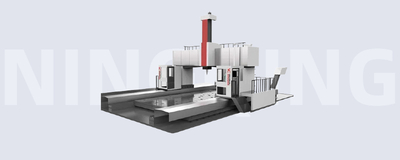
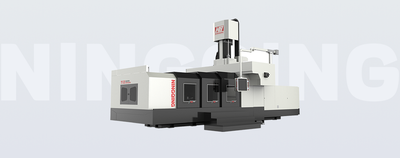
High-precision mold processing requires CNC machine tools with strong rigidity and high precision. Equipment such as gantry machining centers and five-axis CNC milling machines can maintain stability, reduce vibration and improve machining accuracy during high-speed cutting.
2. Tool accuracy and wear control
The selection and maintenance of tools directly affect the machining accuracy. High-quality carbide or diamond tools can improve wear resistance and reduce machining deformation. In addition, reasonable tool life management can avoid dimensional errors caused by tool wear.
3. Reasonable cutting parameter setting
The setting of cutting speed, feed rate and cutting depth needs to be precisely controlled. For example, during high-speed processing, reasonably increasing the cutting speed can reduce the cutting force, thereby reducing the deformation of the workpiece and improving the surface quality.
4. Temperature control and thermal deformation management
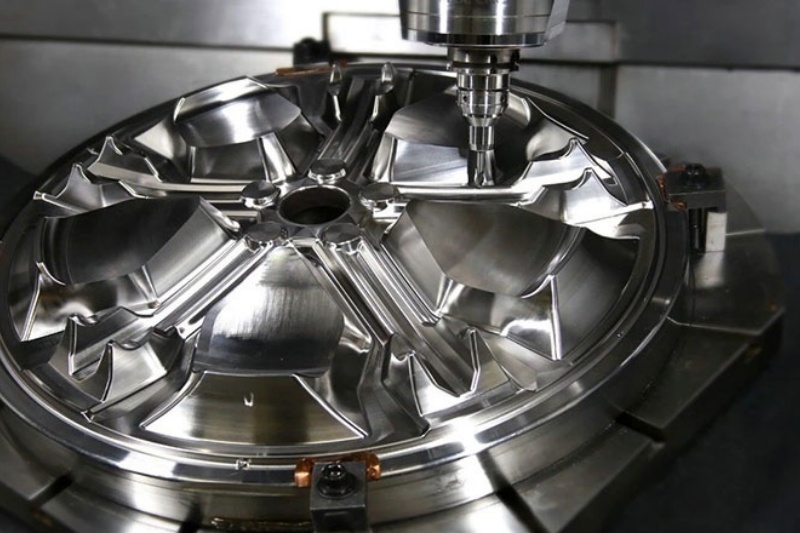
During the mold processing process, the spindle, tool and workpiece will generate heat, resulting in thermal expansion and dimensional changes. The use of **coolant, constant temperature control system, minimum quantity lubrication (MQL)** and other methods can effectively control the temperature and reduce the impact of thermal deformation on processing accuracy.
5. Error compensation technology
Modern CNC machine tools are usually equipped with error compensation functions, such as: laser probe measurement, tool length compensation, automatic coordinate correction, etc., which can adjust the processing deviation in real time and improve accuracy.
So, how to reduce errors in high-speed processing?
High-speed machining (HSM) is characterized by high speed, low cutting force and small cutting depth, which can significantly reduce processing errors and improve mold quality.
1. Increase the spindle speed and reduce cutting force
The traditional machining method has a low cutting speed and a large cutting force between the tool and the workpiece, which can easily cause the workpiece to deform. High-speed machining uses a high-speed spindle (usually up to 20,000~60,000 rpm), which has a small cutting force, which helps to reduce machining deformation and improve dimensional accuracy.
2. Adopt a small step and multiple cutting strategy
High-speed machining usually adopts a small step and multiple cutting strategy to avoid removing too much material at one time, reduce tool load and heat accumulation, and thus improve machining stability and surface quality.
3. Use high-rigidity tools and reasonable tool paths
In high-speed machining, using short and high-rigidity tools can reduce vibration and ensure machining stability. In addition, optimizing tool paths (such as spiral cutting, equal-height cutting, etc.) can avoid sudden force changes on the tool, thereby reducing errors.
4. Adopt intelligent error compensation technology
Many advanced CNC machine tools are equipped with intelligent error compensation systems, which automatically adjust the machining trajectory by real-time monitoring of parameters such as temperature, spindle runout, and workpiece position to ensure final dimensional accuracy.
5. Improve the stability of the processing environment
The temperature, humidity and vibration of the mold processing environment will affect the processing accuracy. For example, maintaining a constant temperature (within ±0.5°C) in the precision processing workshop can reduce the thermal deformation of the machine tool and the workpiece and improve the dimensional stability.
Summary
The precision control of mold processing involves many aspects, including machine tool performance, tool selection, cutting parameters, temperature control and error compensation. High-speed processing technology effectively reduces processing errors and improves processing accuracy and efficiency through high speed, small step distance, multiple cutting, intelligent compensation and other methods. In actual production, reasonable optimization of processing technology and cooperation with advanced CNC technology will be able to greatly improve the quality of mold manufacturing and meet the needs of modern manufacturing industry for high-precision and high-complexity molds.