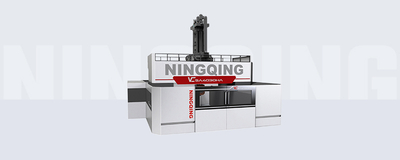
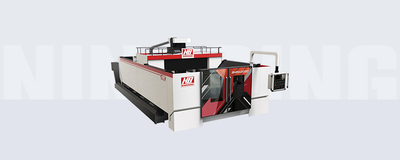
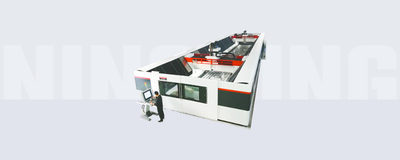
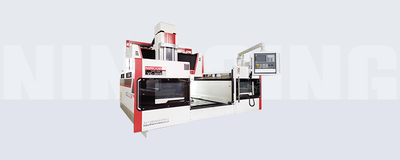
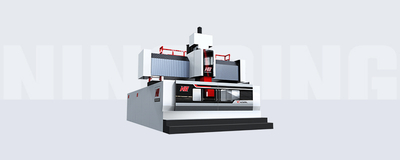
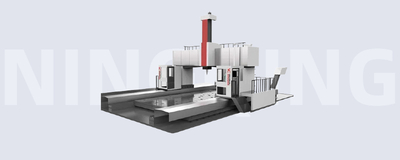
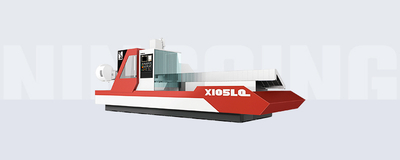
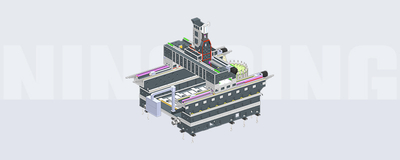
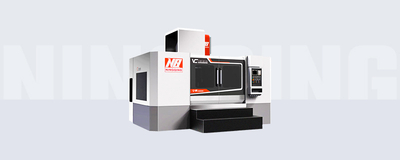
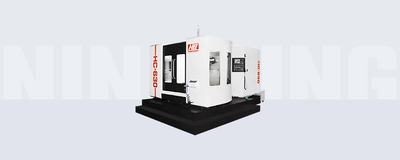
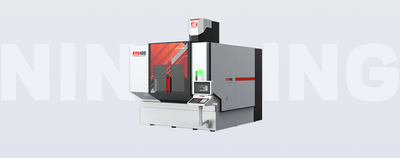
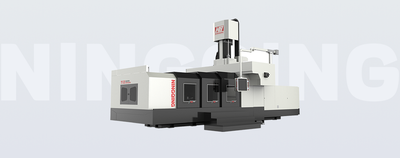
Three-axis machine tools control three linear axes, X, Y, and Z, and the tool moves along a straight line, which is suitable for plane or simple three-dimensional processing. Four-axis machine tools add a rotation axis (usually A axis, rotating around the X axis) on the basis of three axes, so that the workpiece or tool can rotate a certain angle. The five-axis machining center further adds a second rotation axis (such as B axis or C axis) to achieve five degrees of freedom. This multi-axis linkage allows the tool to approach the workpiece from any angle.
Processing capability: complexity difference
Three-axis machine tools are suitable for two-dimensional or simple three-dimensional parts processing, such as flat milling or drilling, but the workpiece needs to be flipped multiple times when facing complex curved surfaces (such as turbine blades). Four-axis machine tools can process cylindrical surfaces or partial inclined surfaces, such as gears or cams, through rotating axes, but they still cannot cope with multi-angle complex structures. Five-axis machining centers can process complex geometric shapes at one time, such as aviation parts or mold cavities. The tool can flexibly adjust its posture and easily complete deep grooves and curved surface processing.
Precision and efficiency: clamping and path
Three-axis machining requires multiple clamping and adjustment of the workpiece. Each repositioning may introduce errors and low efficiency. The four-axis reduces some clamping requirements, but the rotation range is limited, and complex parts still need to be completed in steps. The five-axis machining center achieves "one clamping, multi-faceted processing" through multi-axis linkage. For example, DMG MORI's five-axis machine can complete five-face cutting in a single positioning, with an error control within ±0.005 mm, while optimizing the tool path, shortening the idle stroke, and improving efficiency by 30%-50%.
Equipment complexity and cost
Three-axis machine tools have a simple structure, intuitive operation, and low cost, which are suitable for small and medium-sized enterprises or primary processing, such as Haas's VF series. Four-axis machine tools add a rotating mechanism, with moderate complexity and price, and are often used for medium-difficulty parts. Five-axis machining centers (such as Mazak's VARIAXIS) involve multi-axis servo systems and advanced control software, and the manufacturing difficulty and price are significantly higher than the previous two, and the maintenance cost is also higher, which is suitable for high-end manufacturing.
Application scenario: industry adaptability
Three-axis machine tools are widely used for basic parts processing, such as mechanical base plates or simple molds, and have a high penetration rate. Four-axis machine tools are suitable for parts that require rotation processing, such as automotive shaft parts or small impellers. Five-axis machining centers shine in the fields of aerospace, wind turbine blade molds, and medical implants. For example, when processing titanium alloy parts for F-35 fighter jets, five-axis machine tools can efficiently complete complex surfaces and deep holes, while three-axis or four-axis are difficult to handle.
Three-axis, four-axis and five-axis machining centers each have their own positioning: three-axis is simple and efficient, four-axis transition is flexible, and five-axis is known for complex processing and high precision. When choosing, you need to weigh the complexity of the part, production requirements and budget. For high-end manufacturing that pursues efficiency and quality, five-axis machining centers are undoubtedly the best choice, while three-axis and four-axis still have irreplaceable value in basic processing.
We'd love to hear from you! Whether you have questions, need more information, or want to discuss a potential partnership, please fill out the form below and we'll get back to you as soon as possible.