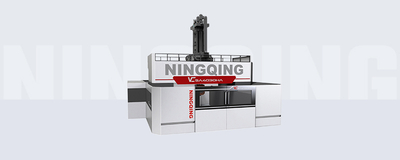
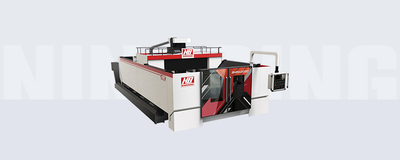
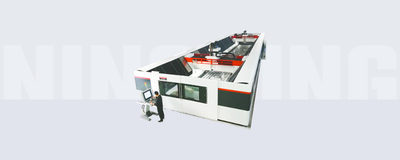
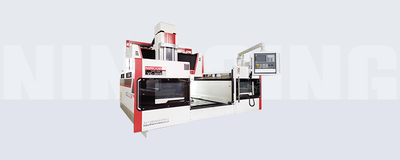
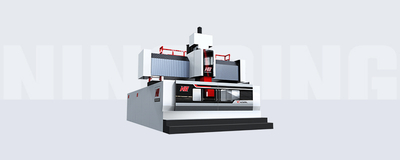
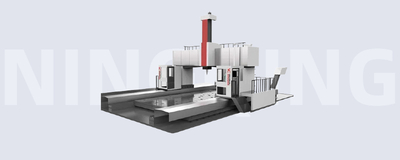
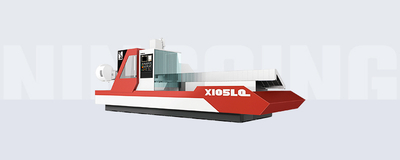
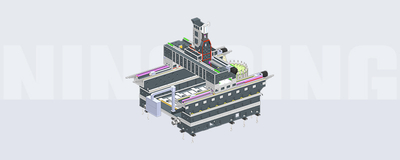
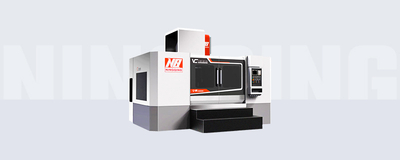
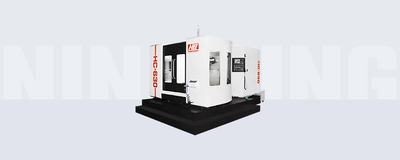
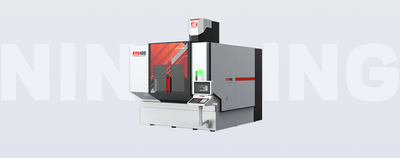
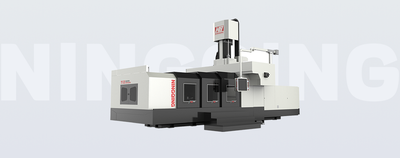
With the continuous development of the aerospace industry, the requirements for the accuracy, complexity and reliability of parts are increasing. Traditional three-axis or four-axis CNC machine tools (CNC) often have limitations when machining complex curved parts, and five-axis CNC machining technology has become one of the key technologies for aerospace parts manufacturing with its high precision, high efficiency and high flexibility. This article will introduce the advantages of five-axis CNC machining in aerospace parts manufacturing in detail.
1. Improve machining accuracy and meet high-demand manufacturing
Aerospace parts usually have extremely high dimensional accuracy and surface finish requirements, such as engine blades, turbine disks, wing structural parts, etc. These parts require strict control of shape errors to ensure flight safety.
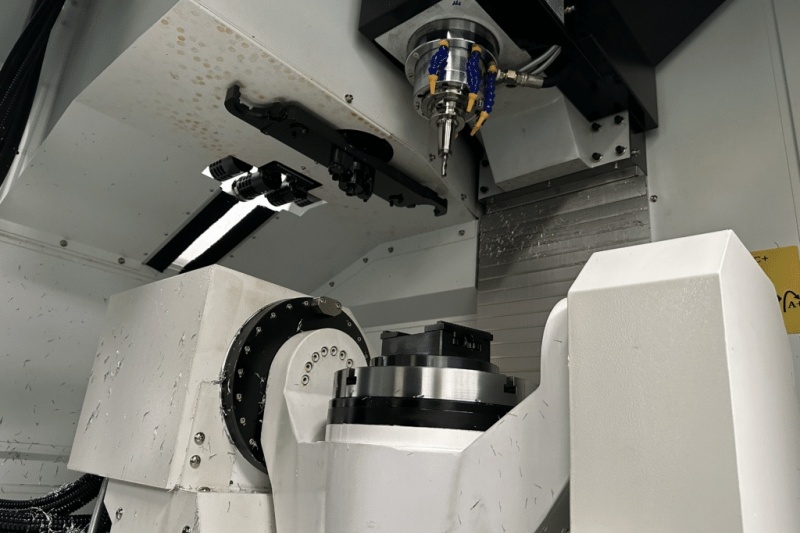
Five-axis CNC machining can reduce the errors caused by tool changes or multiple clamping during the machining process by simultaneously controlling the three linear axes (X, Y, Z) and two rotary axes (A, B or C) of the tool. Since the workpiece can complete multi-faceted machining in one clamping, the problem of multiple repositioning of traditional three-axis machine tools is avoided, thereby improving machining accuracy and reducing clamping errors.
2. Improve processing efficiency and shorten production cycle
In aerospace manufacturing, the complexity of parts often requires processing at multiple angles, and traditional three-axis CNC machines may require multiple clamping and tool changing operations, resulting in increased processing time. The rotating axis of the five-axis CNC machine allows the tool to contact the workpiece from different angles to achieve integrated processing, thereby reducing the time for tool change, clamping and adjustment, and greatly shortening the production cycle.
In addition, since the five-axis CNC machine can optimize the tool path, reduce non-cutting time, and increase the cutting speed, the overall processing efficiency is significantly improved.
3. Adapt to the processing of complex curved surface parts
Among aerospace parts, turbine blades, aircraft engine components, fuselage structural parts, etc. often have complex free-form surface structures. When processing such parts, traditional three-axis CNC machines need to process multiple planes in steps, which may affect the surface finish and accuracy.
The two rotating axes of the five-axis CNC machine can adjust the angle between the tool and the workpiece at any time, so that the tool always contacts the workpiece surface at the best angle, thereby reducing cutting force and improving the quality of the processed surface. This is crucial to improving the aerodynamic performance, durability and safety of aerospace parts.
4. Reduce tool wear and reduce production costs
Since the five-axis CNC machine can optimize the contact angle between the tool and the workpiece, the tool can always be processed at the optimal cutting angle, thereby reducing cutting force and tool wear. Compared with three-axis CNC machine tools, five-axis machining reduces tool damage caused by unreasonable cutting angles, extends tool life, reduces the frequency of tool replacement, and thus reduces production costs.
In addition, five-axis CNC machining can reduce dependence on expensive special fixtures because it can complete multi-angle machining in one clamping, reducing the need to use multiple fixtures for secondary clamping.
5. Improve material utilization and reduce waste
Aerospace parts often use expensive materials such as titanium alloys, high-temperature alloys, carbon fiber composites, etc. Traditional machining methods may result in a large amount of material waste, while five-axis CNC machining can more accurately control the cutting path, improve material utilization, and reduce waste during machining.
At the same time, five-axis CNC machine tools can adopt more efficient processing strategies, such as equal height cutting and dynamic milling, to improve processing efficiency and reduce material loss, so that aerospace companies can achieve more environmentally friendly production while reducing costs.
6. Adapt to personalized and small batch production
The aerospace industry often needs to produce customized or small batches of high-precision parts, while traditional mold processing methods are costly and inflexible. Five-axis CNC machine tools can quickly adjust processing procedures according to the design requirements of different parts to achieve a highly flexible production model.
In addition, five-axis CNC machine tools can be seamlessly connected with CAD/CAM software, making the process from design to production more automated, greatly improving the production efficiency of small batch customized parts.