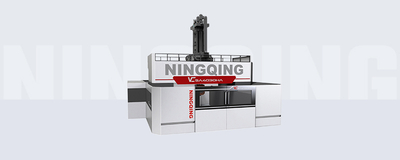
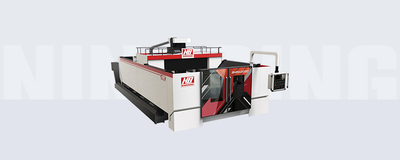
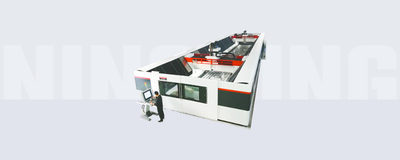
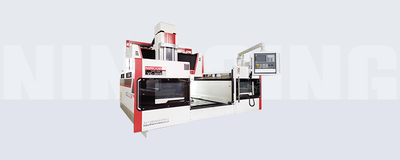
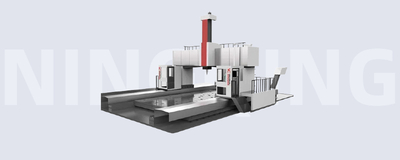
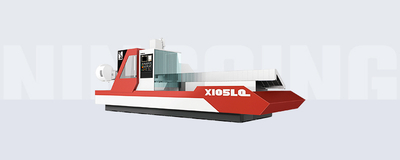
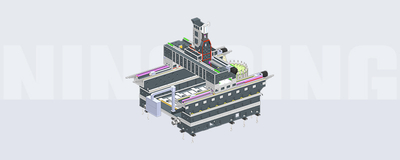
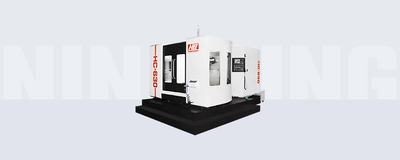
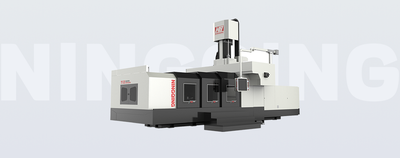
Wind turbine blade molds usually have large streamlined surfaces with a length of up to 50-100 meters, and the surface needs to be smooth to ensure aerodynamic performance. Three-axis machine tools are limited to single-direction movement and it is difficult to efficiently process complex geometric shapes, while five-axis CNC machine tools can cut from multiple angles through the linkage of three linear axes X, Y, and Z and two rotary axes A and B. For example, DMG MORI's five-axis gantry machining center can complete the surface milling of the mold in one go, avoiding multiple adjustments to the workpiece position and improving processing consistency.
Advantage 2: Reduce the number of clamping times and errors
The wind turbine blade mold is large in size, and traditional processing needs to be completed in sections. Multiple clamping is not only time-consuming, but also easy to introduce positioning errors. Five-axis CNC machining can complete multi-faceted machining in one clamping, significantly reducing the movement of the workpiece. For example, when machining the root connection area and the tip transition area of the blade mold, the five-axis machine tool directly cuts through tool tilting and rotation, and the error can be controlled within ±0.01 mm. This "one-time molding" feature greatly improves the overall accuracy of the mold.
Advantage 3: Improve processing efficiency
Time is a key cost factor in wind turbine mold manufacturing. Five-axis CNC machine tools shorten the processing cycle through high-speed cutting (HSM) and multi-axis linkage. Taking Mazak's five-axis machine tool as an example, its spindle speed can reach 20,000 RPM, which can quickly remove material, while optimizing tool paths and reducing empty travel. Compared with three-axis machining, five-axis technology can shorten the manufacturing time of large molds by 30%-40%, accelerating the commissioning of wind power projects.
Advantage 4: Improved surface quality
The surface roughness of wind turbine blade molds directly affects the demolding and service life of the blades. Five-axis CNC machining can flexibly adjust the tool angle to avoid scratches caused by excessive cutting at the front end of the tool. For example, using a ball-end milling cutter to process along the normal direction of the curved surface, the surface roughness can reach Ra0.4 microns or less, reducing the subsequent polishing process. This not only improves the quality of the mold, but also reduces the cost of manual finishing.
In actual production, five-axis CNC machining has been widely used in wind turbine mold manufacturing. For example, wind power giants such as Vestas use five-axis machine tools to produce 100-meter-class blade molds, ensuring high efficiency and high quality. In the future, as the size of wind turbine blades continues to increase, five-axis technology will combine artificial intelligence and additive manufacturing to further optimize mold design and processing processes.
Conclusion
Five-axis CNC machining has significantly improved production levels in wind turbine blade mold manufacturing with its advantages of complex surface processing, reduced errors, high efficiency, excellent surface quality and material adaptability. It not only meets the wind energy industry's demand for large, high-precision molds, but also promotes cost optimization of renewable energy equipment. With technological advances, five-axis machining will play a greater role in the wind power field and contribute to the development of clean energy.
We'd love to hear from you! Whether you have questions, need more information, or want to discuss a potential partnership, please fill out the form below and we'll get back to you as soon as possible.