Application of CNC machine tools in die-casting mold manufacturing
Die-casting molds are usually composed of cores, cavities and mold frames, requiring smooth surfaces, precise dimensions and resistance to high temperatures and high pressures. CNC machine tools play multiple roles in the manufacturing process:
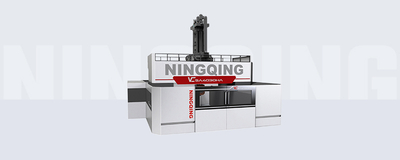
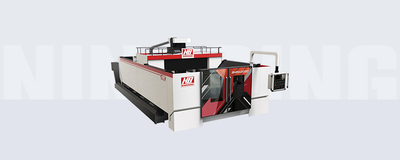
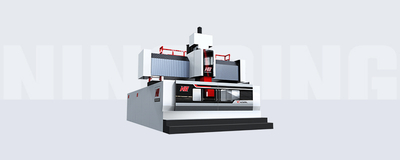
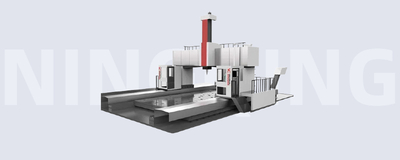
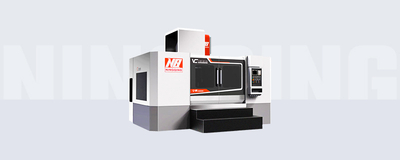
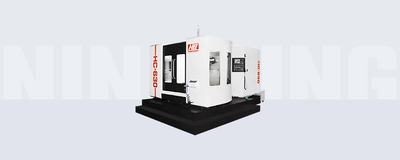
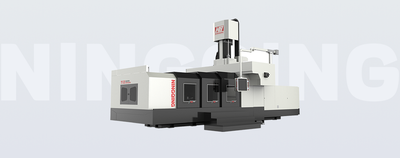
Milling and drilling: CNC milling machines are used to process complex cavities and cooling channels of molds. For example, five-axis machining centers (such as DMG MORI's DMU series) can complete multi-faceted machining at one time to ensure geometric accuracy.
Turning: For round mold parts, such as guide pins and ejectors, CNC lathes can achieve high-precision outer and inner hole machining.
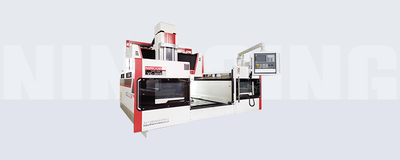
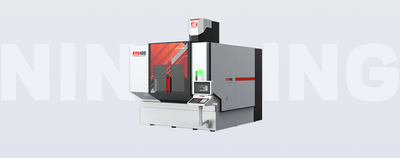
Electrospark machining (EDM): CNC-controlled EDM machines remove materials through discharge, which is suitable for processing deep grooves or fine structures and is often used for mold detail finishing.
Surface finishing: High-speed CNC machines combined with polishing processes can make the mold surface roughness reach Ra0.2 microns or less, improving the quality of die-casting parts.
Advantage 1: High precision and consistency
Die-casting molds need to withstand high pressure and high temperature. Slightly larger dimensional deviations may cause leakage or shorten the life of the mold. CNC machine tools control the processing error within ±0.005 mm through digital control. For example, Makino's high-precision milling machine can ensure the fitting accuracy of the cavity and the core, avoiding flash during the die-casting process. In addition, CNC's programmed operation ensures the consistency of mass production and reduces manual errors.
Die-casting molds often need to process complex cavities and flow channels, which are difficult to handle with traditional manual or ordinary machine tools. The multi-axis linkage function of CNC machine tools (such as five-axis or milling and turning) can easily cope with it. For example, the cooling channel design of automobile engine block molds is complex. CNC technology can accurately process curved surfaces and deep holes, improve mold heat dissipation performance, and extend service life.
Advantage 3: Improved production efficiency
CNC machine tools significantly shorten the manufacturing cycle through automation and high-speed cutting. Automatic tool change system (ATC) and continuous processing capabilities reduce downtime. For example, Mazak's INTEGREX series can complete multiple process processing in one clamping. Compared with traditional methods, CNC can shorten mold manufacturing time by 30%-50%, especially in mass production.
Advantage 4: Material utilization and cost optimization
Taking automotive die-casting molds as an example, CNC machine tools have been widely used in the production of gearbox housing molds. Their high precision ensures that parts fit closely and reduces post-processing steps. In the future, with the integration of artificial intelligence and the Internet of Things, CNC machine tools will achieve adaptive processing and real-time monitoring, further improving efficiency and quality.
Conclusion
CNC machine tools have high precision, complex processing capabilities, high efficiency and cost optimization as their core advantages in die-casting mold manufacturing, which has promoted the technological progress of the industry. Whether it is a small enterprise or a large factory, CNC technology provides reliable support for mold manufacturing. With the development of intelligence, its application potential will be further released, bringing greater value to the die-casting industry.
We'd love to hear from you! Whether you have questions, need more information, or want to discuss a potential partnership, please fill out the form below and we'll get back to you as soon as possible.