Horizontal Machining Center Vs Vertical Machining Center: Which One Is More Suitable For Your Production Needs?
You are here: Home » News » Industry Insights » Horizontal Machining Center Vs Vertical Machining Center: Which One Is More Suitable For Your Production Needs?
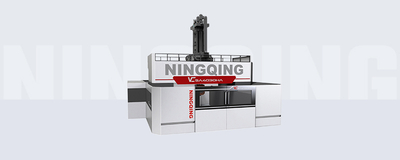
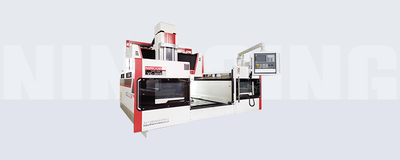
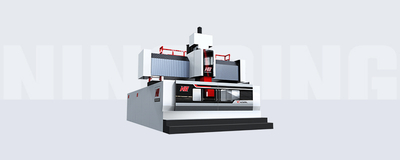
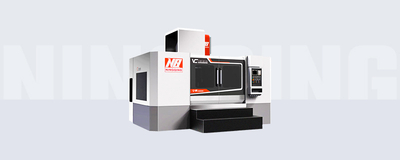
The spindle of the vertical machining center (VMC) is perpendicular to the worktable, and the parts are usually fixed on a flat worktable for processing. Its structure is compact and the operation is intuitive, which is suitable for two-dimensional or three-dimensional processing of small and medium-sized parts.
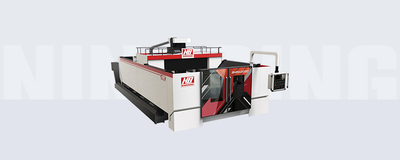
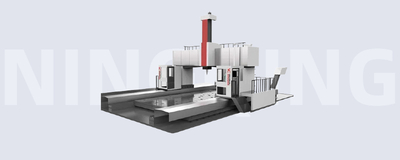
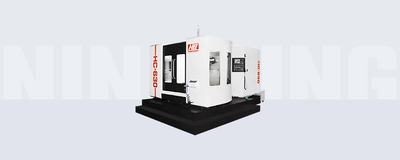
The spindle of the horizontal machining center (HMC) is parallel to the ground, and the workpiece is often fixed on a rotating worktable. It can achieve continuous processing of multiple faces or multiple angles, and is often used for parts with large volume, complex shape or multi-faceted processing.
2. Comparison of processing capabilities
Vertical machining centers are suitable for processing discs, shells, and mold parts, such as mobile phone shells, mold cavities, brackets, etc. The processing efficiency is high, the tool change speed is fast, and it is suitable for medium-volume and multi-variety production.
The horizontal machining center has obvious advantages in processing box-type and complex metal parts. Its matching four-axis or five-axis workbench can realize multi-faceted processing with one clamping, improve the accuracy consistency and automation level, and is very suitable for large-scale and highly repetitive production tasks.
3. Land occupation and cost
Vertical machining center equipment is relatively compact, small in footprint, low in initial investment, simple in operation, and convenient in maintenance. It is a common choice for entry-level CNC equipment for small and medium-sized enterprises.
The horizontal machining center occupies a large area and has a high degree of automation. It is suitable for integration with automatic loading and unloading systems and pallet exchange systems. Although the one-time investment is high, it is more cost-effective in production line production in the long run.
4. Selection suggestions
If you are engaged in mold manufacturing, precision parts proofing, and small-batch multi-variety processing, it is more flexible and economical to choose a vertical machining center.
No machining center is "absolutely better". The key is to look at your product characteristics, production scale and budget. When selecting a model, you should combine specific application requirements, production processes, factory space and future expansion directions to select the most suitable equipment to bring the greatest economic benefits and competitive advantages to the company.
We'd love to hear from you! Whether you have questions, need more information, or want to discuss a potential partnership, please fill out the form below and we'll get back to you as soon as possible.