The manufacturing cost of aerospace equipment is often high due to its high precision, high reliability and complexity. Optimizing manufacturing costs can not only enhance the competitiveness of enterprises, but also promote the sustainable development of the industry. This article will analyze how to effectively reduce the manufacturing cost of aerospace equipment from five aspects: material selection, process improvement, automation application, supply chain management and design optimization.
1. Material selection: balancing performance and cost
Aerospace equipment has extremely high requirements for material performance, such as lightweight, high temperature resistance and corrosion resistance. Traditionally, titanium alloys and composite materials are widely used, but they are expensive. Optimization strategies include:
Alternative materials: explore high-strength aluminum alloys or new polymers to reduce costs while meeting performance requirements. For example, Boeing 787 has partially replaced titanium alloys with carbon fiber composites.
Material recycling: Reduce the cost of raw material procurement by recycling metal chips or waste (such as aluminum and titanium) in processing.
Precise dosage: Use simulation software to calculate material requirements to avoid waste caused by overdesign.
2. Process improvement: improve efficiency and quality
The manufacturing process directly affects the cost. Traditional processing methods (such as milling and drilling) are time-consuming and produce a lot of waste. Improvement directions include:
Additive manufacturing (3D printing): used for the production of complex parts, such as GE's LEAP engine nozzle, reducing costs by about 30% by reducing material waste and processes.
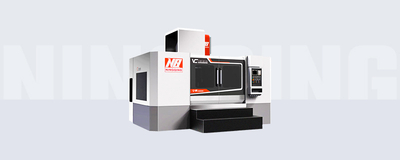
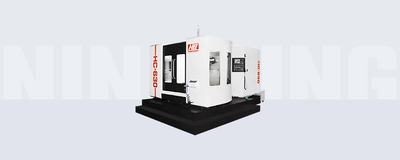
High-speed cutting (HSM): using the high-speed spindle of CNC machine tools to increase processing speed and extend tool life.
Lean production: implement lean manufacturing principles to reduce non-value-added links, such as waiting time and inventory backlogs.
3. Automation application: reduce labor and errors
Aerospace manufacturing involves a large number of repetitive operations and high-precision assembly, with high labor costs and error rates. Automation is the key to optimizing costs:
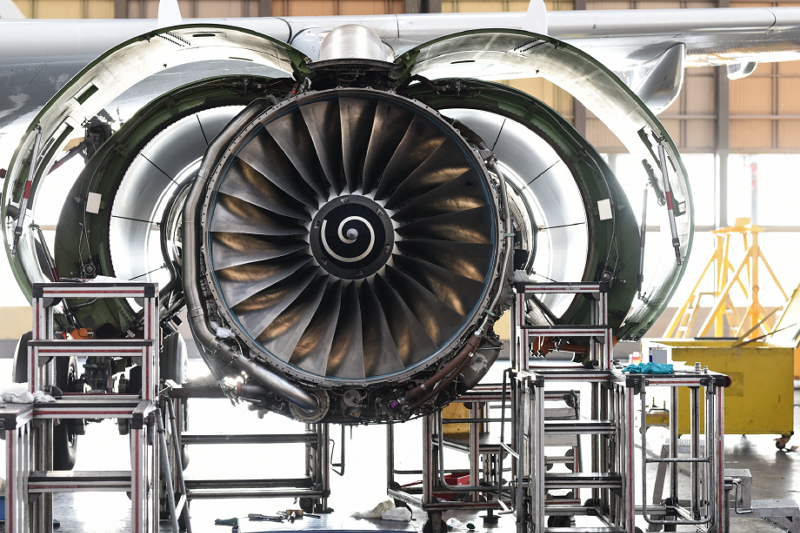
Robot integration: using robots for welding, drilling and assembly, such as the Airbus A350 production line, to reduce labor hours and improve consistency.
Intelligent monitoring: real-time monitoring of equipment status through sensors and AI, predicting maintenance needs and avoiding unexpected downtime.
Unmanned production line: Combine AGV (automatic guided vehicle) and automated loading and unloading system to achieve 24-hour efficient production.
4. Supply chain management: reduce external costs
Supply chain efficiency has a significant impact on manufacturing costs, especially in the context of globalization. Optimization measures include:
Local procurement: select local suppliers to reduce transportation costs and tariffs, while shortening delivery cycles.
Long-term cooperation: sign long-term contracts with key suppliers to lock in prices and ensure stable supply.
Digital management: use supply chain management software (such as SAP) to optimize inventory and logistics and reduce capital occupation.
5. Design optimization: control costs from the source
The design stage determines 70%-80% of the manufacturing cost, and optimized design is the root of cost control:
Modular design: decompose the equipment into standardized modules for easy mass production and maintenance, such as the modular components of the F-35 fighter.
Simulation technology: use CFD (computational fluid dynamics) and FEA (finite element analysis) to optimize the structure and reduce material consumption and processing difficulty.
Design and Manufacturing Collaboration (DFM): The design team collaborates with the manufacturing team to ensure that the design is easy to process and reduce production complexity.
Comprehensive Benefits and Challenges
Through the above optimization, the manufacturing cost of aerospace equipment can be significantly reduced. For example, the combination of additive manufacturing and automation can reduce the cost of some parts by 20%-40%. However, the initial investment (such as purchasing 3D printers or robots) is high, and the technology transformation requires employee training, which may increase the burden in the short term. In the long run, these investments will be recovered through efficiency improvements and quality improvements.
Conclusion
To optimize the manufacturing cost of aerospace equipment, it is necessary to start from multiple dimensions such as materials, processes, automation, supply chain and design, and formulate strategies based on the actual situation of the enterprise. Driven by technological progress and market demand, cost optimization not only improves economic benefits, but also injects vitality into industry innovation, and ultimately achieves an ideal balance between performance and cost.