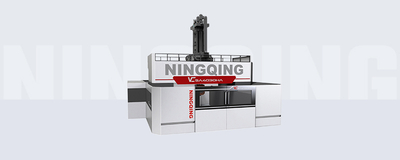
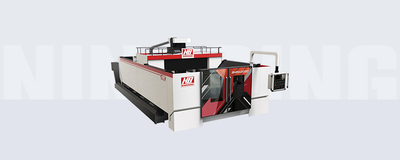
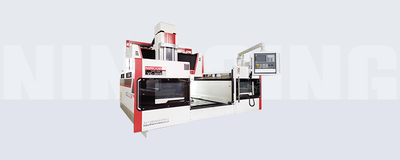
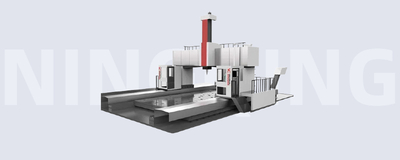
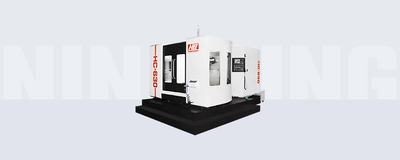
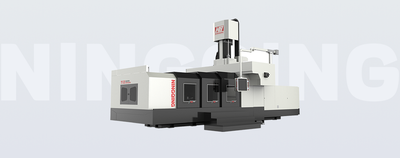
The mold is in direct contact with the material during the molding process. Whether its surface is smooth and the contour is accurate directly determines the molding accuracy and surface effect of the product. Especially in the plastics, electronics, automobile and other industries, higher requirements are placed on the finish and microscopic precision of the mold surface. Traditional manual polishing has low efficiency and poor repeatability, and it is difficult to meet the high standards of modern manufacturing.
The CNC system can accurately control the tool path through the program, achieve micron-level positioning and feed control, effectively avoid dimensional errors caused by human operation, and make the mold surface profile more accurate and uniform.
Multi-axis linkage processing to improve surface continuity
Using a three-axis or five-axis CNC machining center, complex curved molds can be cut continuously and smoothly, greatly reducing cutting marks and knife marks, and improving surface flatness.
High-speed cutting technology to reduce thermal deformation and vibration
Modern CNC machine tools are equipped with high-speed spindles, which can maintain a stable speed during fine machining, and cooperate with small feed cutting to reduce cutting force and thermal effects, improve surface finish, and are suitable for mirror molds or high-gloss parts processing.
Optimize tool paths and improve processing consistency
Optimizing tool paths through CAD/CAM software can make the processing process more reasonable and smooth, avoid local overcutting or repeated cutting, and improve the consistency and quality of the overall surface.
Repeatability and programmability, suitable for mass processing
In industries with high surface requirements such as automotive molds, mobile phone case molds, and transparent plastic molds, CNC technology has become a key processing technology. For example, mirror injection molds often use CNC precision milling and polishing to achieve a mirror-like effect and reduce the time for later polishing. Electrode molds use CNC processing to achieve detailed engraving and edge transitions to improve the quality of discharge machining.
Conclusion
The application of CNC numerical control technology is revolutionizing the surface processing method of molds, making it more efficient, accurate, and stable. With the further development of five-axis machining, intelligent programming, and automation systems, mold manufacturing will continue to move towards high quality and low cost. In the future, whoever masters advanced CNC technology will have the core competitiveness of mold manufacturing.
We'd love to hear from you! Whether you have questions, need more information, or want to discuss a potential partnership, please fill out the form below and we'll get back to you as soon as possible.