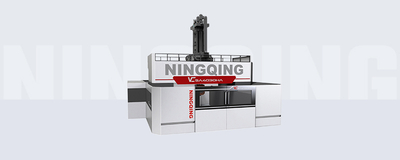
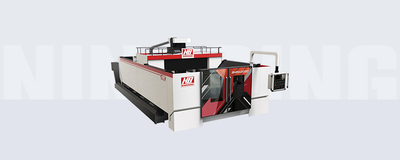
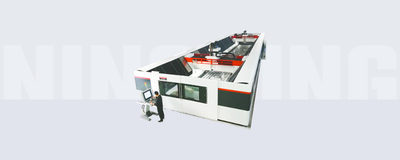
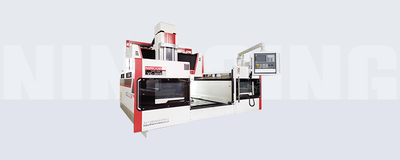
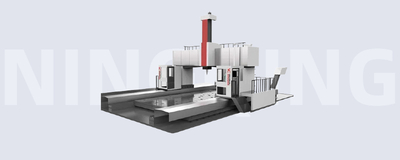
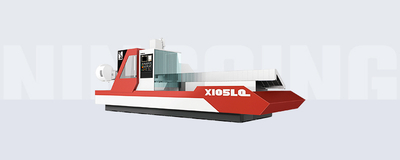
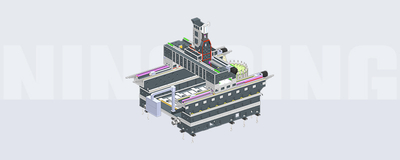
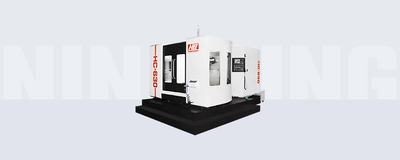
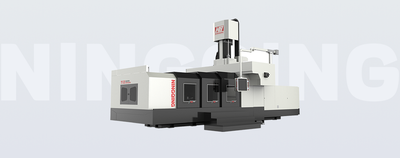
In modern manufacturing, CNC machining (CNC machining) has become the main technology for precision parts machining. Although CNC technology has been highly automated and intelligent, there are still inevitable errors in the actual machining process, which affect the dimensional accuracy, shape accuracy and surface quality of the final product. Understanding the source of errors and taking effective countermeasures is the key to improving machining accuracy and ensuring product quality.
1. The main sources of CNC machining errors
Errors of the machine tool itself
Including position errors and motion errors caused by inaccurate manufacturing and assembly of mechanical parts such as guide rails, lead screws, and spindles. For example, lead screw clearance, guide rail wear, or spindle radial runout will directly affect machining accuracy.
Tool error
The geometric shape error, installation error, and wear degree of the tool will lead to machining size deviation. For example, after the tool is worn, the cutting edge becomes blunt, which may cause the workpiece size to be larger or the surface roughness to decrease.
Workpiece clamping error
If the workpiece is not accurately positioned in the fixture, there is floating or unstable clamping, it will cause displacement during the machining process, which will affect the workpiece size and shape and position tolerances.
Thermal deformation error
During the processing, the spindle, motor, tool and workpiece generate heat due to high-speed operation and friction, resulting in thermal expansion and contraction, causing changes in part size.
Programming error and operation error
Inaccurate program instructions, improper tool compensation settings or incorrect operator input data may also cause processing errors.
Vibration and external interference
During high-speed processing or uneven cutting resistance, the machine tool is prone to vibration, especially in the processing of thin-walled or cantilever parts, which is easy to cause dimensional instability.
2. Methods to improve CNC processing accuracy
Select high-precision CNC equipment
Using machine tools with high rigidity and high repeatability can effectively reduce mechanical errors. For example, equipment equipped with a linear motor drive system can greatly reduce transmission errors.
Tool management and wear monitoring
Regularly check the tool status, use reliable and sharp tools, replace worn tools in time, and cooperate with the tool life management system to maintain stable cutting.
Optimize fixture design and clamping process
Use special fixtures to ensure accurate positioning and reduce clamping deformation; use multi-point positioning, auxiliary support and other methods to improve clamping stability.
Optimize parameters such as cutting speed, feed speed, cutting depth, etc. to avoid tool jumping or workpiece deformation caused by excessive load or high speed.
Use online measurement and error feedback system
By connecting online measurement equipment such as laser probes and three-coordinate measurement systems, real-time detection and automatic error correction during machining can be achieved.
Conclusion
Precision control of CNC machining is a systematic project that requires comprehensive consideration from multiple aspects such as equipment, process, tool, and environment. With the development of intelligent manufacturing technology, more high-precision control technologies have been introduced into CNC systems, making "high efficiency + high precision" a reality. By continuously optimizing process and equipment management, manufacturing companies will be able to better meet the needs of high-quality machining and enhance overall competitiveness.
We'd love to hear from you! Whether you have questions, need more information, or want to discuss a potential partnership, please fill out the form below and we'll get back to you as soon as possible.